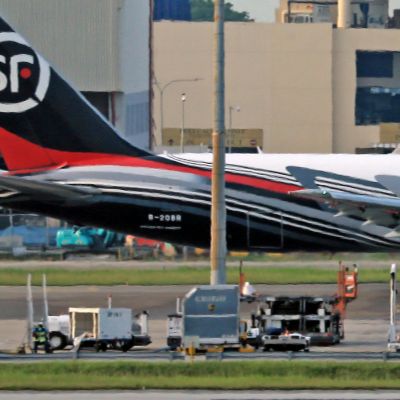
Air freight plays a decisive role in Pacific Islands logistics, where distance, infrastructure limitations, and urgency converge. Unlike major global air cargo corridors characterized by frequency and redundancy, air freight routes serving the Pacific operate under constrained capacity, limited scheduling flexibility, and heightened operational risk. In this environment, air freight is not merely a premium option—it is often the only viable logistics solution.
For freight forwarders Pacific Islands routes demand a level of planning, coordination, and risk awareness that goes well beyond standard international air cargo operations.
Why Air Freight Is Critical in the Pacific Islands
The Pacific Islands encompass a geographically dispersed region where many destinations are separated by vast ocean distances and served by a small number of airports. Shipping schedules can be infrequent, and sea freight transit times may be incompatible with urgent supply requirements.
Air freight becomes essential when cargo supports:
Medical and pharmaceutical supply chains
Critical infrastructure maintenance and spare parts
Government and public sector operations
Perishable and temperature-sensitive goods
Humanitarian and emergency response activities
In these cases, delivery speed is inseparable from operational continuity and, in some contexts, public welfare.
Operational Realities of Pacific Islands Air Freight
Limited Flight Frequency and Capacity
Most Pacific Island destinations are served by a limited number of scheduled flights per week. Cargo space competes directly with passenger demand, seasonal travel fluctuations, and airline network priorities. Freight forwarders must secure uplift well in advance and maintain flexibility when schedules change with little notice.
Aircraft and Runway Constraints
Many Pacific Island airports impose restrictions on aircraft size, landing weight, or runway length. Wide-body aircraft access may be limited or unavailable, requiring the use of narrow-body or turboprop aircraft with reduced payload capacity. This directly affects shipment configuration, palletization, and weight distribution planning.
Ground Handling Limitations
Ground handling facilities vary significantly across the region. Some airports operate with minimal cargo equipment, limited cold-chain capability, or restricted operating hours. Freight forwarders must ensure cargo preparation aligns with destination handling realities to avoid delays or damage on arrival.
The Role of Freight Forwarders in Pacific Air Cargo
Freight forwarders Pacific Islands specialists function as operational integrators rather than booking agents. Their role includes aligning cargo urgency with real-world aviation constraints while managing regulatory and risk exposure.
Freight forwarders manage air freight movements through:
Commercial Air Cargo Coordination
Forwarders arrange space on scheduled services, balancing transit time, reliability, and cost. This requires familiarity with airline operating patterns, historical reliability, and seasonal capacity shifts specific to Pacific routes.
Charter Aircraft Solutions
When scheduled services cannot meet urgency or capacity requirements, freight forwarders coordinate full or part-charter aircraft. Charter operations involve aircraft selection, payload engineering, overflight and landing permits, and ground handling coordination—often under compressed timelines.
Payload Planning and Compatibility
Payload planning is critical in the Pacific context. Forwarders calculate weight and volume limits precisely to ensure compliance with aircraft performance constraints, avoiding last-minute offloads or reconfigurations that can jeopardize delivery timelines.
Dangerous Goods and Regulated Cargo
Air freight into the Pacific frequently includes regulated items such as medical materials, batteries, chemicals, and industrial components. Freight forwarders manage classification, packing instructions, labeling, and documentation in accordance with international aviation standards and destination regulations.
Managing Risk in Time-Critical Air Freight
Air freight to the Pacific Islands is exposed to higher-than-average disruption risk. Weather events, aircraft substitutions, crew availability, and infrastructure constraints can all impact schedules.
Experienced freight forwarders mitigate these risks by:
Building realistic buffer periods into delivery timelines
Monitoring weather and seasonal disruption patterns
Maintaining alternative routing and carrier options
Coordinating closely with destination agents before cargo departure
Risk management in Pacific air freight is proactive rather than reactive, focusing on reducing exposure rather than responding to failure.
When Air Freight Becomes the Default Option
In many Pacific Island supply chains, air freight is not selected for speed alone, but because alternatives are operationally impractical. Extended sea transit times, limited vessel schedules, and downstream distribution challenges can make air freight the only option capable of meeting project, medical, or emergency requirements.
For freight forwarders Pacific Islands operations, understanding when air freight should replace—or supplement—sea freight is a critical judgment grounded in regional experience rather than theoretical cost comparison.
Air Freight as a Regional Lifeline
Air freight in the Pacific Islands functions as a logistical lifeline. It connects remote communities to essential goods, supports infrastructure resilience, and enables rapid response when disruptions occur. The effectiveness of air freight operations depends not on speed alone, but on planning discipline, technical knowledge, and local coordination.
In this environment, freight forwarders do not simply move cargo—they sustain connectivity across a region where margins for error are minimal and logistics outcomes carry disproportionate impact.